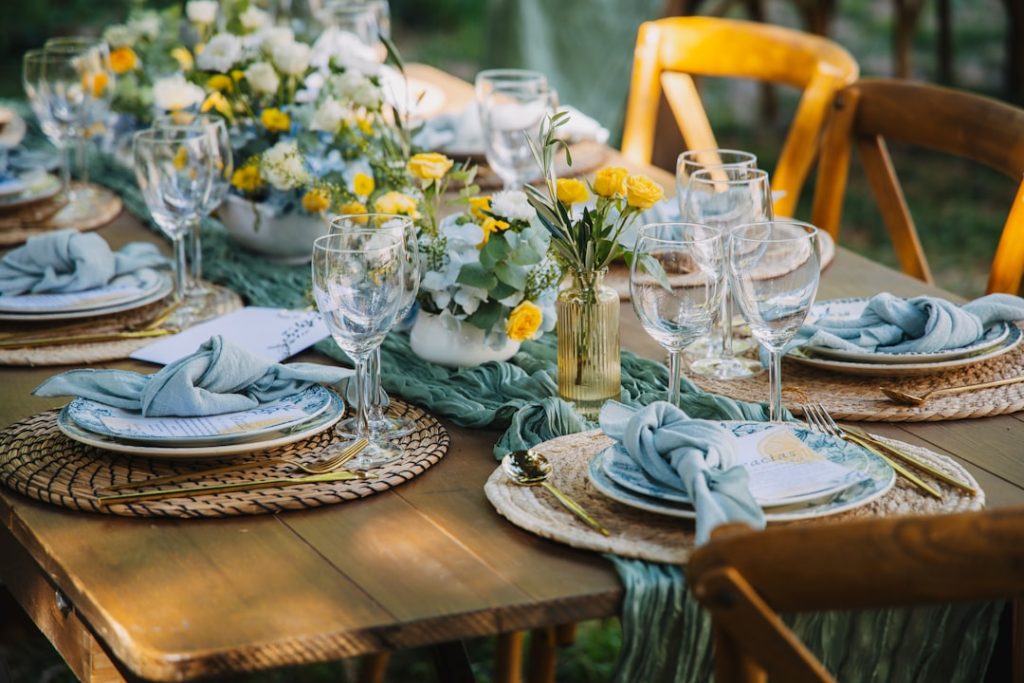
Wedding menu planning requires careful consideration of multiple factors to ensure guest satisfaction and event success. The menu selection directly influences the overall dining experience and should align with the couple’s preferences while accommodating guest needs. The menu planning process begins with determining the reception format.
Common options include plated dinners, buffet service, family-style dining, or cocktail receptions with hors d’oeuvres. Each service style affects food presentation, guest flow, and overall event logistics. Plated dinners typically offer more formal presentation and portion control, while buffets provide variety and allow guests to customize their selections.
Guest dietary requirements represent a critical planning consideration. Common dietary restrictions include vegetarian, vegan, gluten-free, kosher, halal, and various food allergies. Collecting dietary information during the RSVP process enables proper menu accommodation.
Most catering services can provide alternative options or modify existing dishes to meet specific dietary needs. Clear communication with the caterer about guest requirements ensures appropriate meal preparation and service.
Key Takeaways
- Wedding menu planning should accommodate diverse dietary needs and preferences.
- Vegan, vegetarian, gluten-free, paleo, nut-free, and allergy-friendly options ensure inclusivity.
- Keto, low-carb, pescatarian, and seafood dishes offer variety for health-conscious guests.
- Incorporating cultural and ethnic cuisine adds unique and personalized flavors to the menu.
- Dessert selections should cater to all guests, including those with dietary restrictions.
Vegan and Vegetarian Options
Incorporating vegan and vegetarian options into your wedding menu is not only considerate but also a chance to showcase vibrant flavors and creative dishes. Many guests appreciate having plant-based choices, whether they follow a strict vegan diet or simply enjoy the occasional meatless meal. Start by exploring seasonal vegetables and grains that can be transformed into stunning entrees.
Think roasted vegetable platters, hearty grain salads, or even stuffed bell peppers bursting with flavor. Consider offering a variety of appetizers that cater to plant-based diets. Miniature vegetable skewers, savory stuffed mushrooms, or crispy falafel bites can be delightful starters that set the stage for a memorable meal.
For the main course, think about dishes like creamy risotto with wild mushrooms or a colorful vegetable curry served with fragrant basmati rice. By presenting these options beautifully, you’ll not only satisfy your vegan and vegetarian guests but also impress everyone with the deliciousness of plant-based cuisine.
Gluten-Free and Paleo Options

As you plan your wedding menu, it’s essential to consider gluten-free and Paleo options for guests with specific dietary needs. Gluten intolerance is increasingly common, and many people are opting for gluten-free diets for health reasons. Offering gluten-free dishes ensures that everyone can indulge without worry.
Think about incorporating naturally gluten-free ingredients like quinoa, rice, and fresh vegetables into your menu. A flavorful quinoa salad with roasted vegetables and a zesty lemon dressing can be both satisfying and safe for those avoiding gluten. For guests following a Paleo diet, focus on whole foods that are free from grains, legumes, and processed sugars.
Grilled meats paired with seasonal vegetables make for a hearty main course that aligns with Paleo principles. Consider serving dishes like herb-marinated chicken with a side of roasted sweet potatoes or grilled salmon with asparagus. By providing these options, you’ll create an inclusive dining experience that allows all guests to enjoy their meals without feeling left out.
Nut-Free and Allergy-Friendly Options
Food allergies are a significant concern for many guests, so it’s crucial to include nut-free and allergy-friendly options in your wedding menu planning. Start by consulting with your caterer about potential allergens in each dish. This will help you create a menu that minimizes risk while still offering delicious choices.
For appetizers, consider options like vegetable crudités with hummus or cheese platters featuring nut-free selections. When it comes to main courses, think about simple yet flavorful dishes that avoid common allergens. Grilled chicken or fish served with seasonal vegetables can be both safe and satisfying.
Additionally, consider offering a pasta dish made with gluten-free noodles to cater to various dietary needs. By being mindful of allergies and providing clear labeling on food items, you’ll create a welcoming environment where all guests can enjoy their meals without concern.
Keto and Low-Carb Options
The popularity of keto and low-carb diets has surged in recent years, making it essential to include these options in your wedding menu planning. Guests following these diets often seek meals that are high in healthy fats and low in carbohydrates. Start by incorporating protein-rich dishes such as grilled steak or herb-roasted chicken served alongside non-starchy vegetables like zucchini noodles or sautéed spinach.
For appetizers, consider serving cheese platters featuring a variety of cheeses paired with olives and charcuterie. This not only aligns with keto principles but also adds an elegant touch to your reception. When planning desserts, think about sugar-free options like rich chocolate mousse made with avocado or almond flour-based treats that satisfy sweet cravings without derailing dietary goals.
By thoughtfully including keto-friendly choices, you’ll ensure that all guests feel considered and catered to on your special day.
Pescatarian and Seafood Options

If you have seafood lovers among your guests, incorporating pescatarian options into your wedding menu can elevate the dining experience. Seafood is often seen as a luxurious choice, adding an element of sophistication to your celebration. Start by offering a selection of fresh seafood appetizers such as shrimp cocktail or smoked salmon canapés that will tantalize taste buds right from the beginning.
For the main course, consider serving dishes like grilled salmon with lemon-dill sauce or a seafood paella brimming with flavors from the ocean. Pair these dishes with seasonal vegetables or light salads to create a well-rounded meal that feels both indulgent and refreshing. Don’t forget about dessert; consider offering a light sorbet or fruit tart to cleanse the palate after a rich seafood feast.
By thoughtfully including pescatarian options, you’ll create an inviting atmosphere where all guests can enjoy their meals together.
Incorporating Cultural and Ethnic Cuisine
Your wedding is a celebration of love, so why not infuse it with cultural significance through food? Incorporating ethnic cuisine into your menu can honor your heritage or simply reflect your love for diverse flavors. Start by discussing family recipes or traditional dishes that hold special meaning for you and your partner.
This personal touch will resonate with guests and create a sense of connection. Consider offering a fusion menu that combines elements from different cultures. For example, you might serve tacos alongside traditional Italian pasta dishes or feature sushi rolls alongside classic American barbecue fare.
This approach not only showcases your unique tastes but also encourages guests to explore new flavors together. By embracing cultural diversity in your menu planning, you’ll create an unforgettable dining experience that celebrates love in all its forms.
Dessert and Sweet Treats for Everyone
No wedding is complete without a selection of delectable desserts that leave guests feeling satisfied and delighted. When planning your dessert table, think about offering a variety of sweet treats that cater to different dietary needs while still being indulgent. Consider including gluten-free cakes or vegan cupcakes alongside traditional wedding cake options to ensure everyone has something sweet to enjoy.
Miniature desserts are also an excellent way to provide variety without overwhelming guests. Think bite-sized cheesecakes, fruit tarts, or chocolate truffles that allow everyone to sample different flavors without feeling too full. Additionally, consider incorporating a dessert bar where guests can customize their treats—think build-your-own sundae stations or cookie decorating areas that add an interactive element to the celebration.
As you finalize your wedding menu, remember that the goal is to create an inclusive experience where every guest feels valued and catered to. By thoughtfully considering dietary restrictions and preferences while showcasing your personal style through food, you’ll craft a memorable dining experience that reflects the love shared on this special day. With careful planning and creativity, your wedding menu will be one of the highlights of your celebration—an expression of joy that resonates long after the last bite is taken.
When planning a wedding, it’s essential to consider the diverse dietary needs of your guests to ensure everyone enjoys the celebration. For more inspiration on how to create a memorable dining experience, check out our article on popular wedding trends for 2024, which includes innovative menu ideas that cater to various dietary preferences.
FAQs
What are common dietary needs to consider for a wedding menu?
Common dietary needs to consider include vegetarian, vegan, gluten-free, dairy-free, nut-free, and allergy-specific requirements. Additionally, some guests may follow religious dietary restrictions such as kosher or halal.
How can I accommodate vegetarian and vegan guests at my wedding?
You can offer plant-based dishes that are free from animal products. Popular options include vegetable risottos, stuffed mushrooms, salads with nuts and seeds, and vegan desserts. Clearly labeling these dishes helps guests identify suitable options.
What are some gluten-free wedding menu ideas?
Gluten-free options can include grilled meats, roasted vegetables, rice or quinoa salads, and gluten-free pasta or bread alternatives. Ensure that sauces and dressings are also gluten-free to avoid cross-contamination.
How do I ensure food safety for guests with allergies?
Communicate with your caterer about all known allergies and dietary restrictions. Use separate utensils and preparation areas to prevent cross-contact, and clearly label all dishes with potential allergens.
Is it necessary to provide multiple menu options for different dietary needs?
While not mandatory, offering multiple menu options ensures all guests feel included and can enjoy the meal. It demonstrates thoughtfulness and can enhance the overall wedding experience.
Can I include traditional wedding dishes while catering to dietary restrictions?
Yes, traditional dishes can often be modified to meet dietary needs. For example, a classic beef dish can be paired with a vegetarian alternative, or gluten-containing ingredients can be substituted with gluten-free options.
How should I communicate dietary accommodations to guests?
Include a note on the wedding invitation or RSVP card asking guests to specify any dietary restrictions. Additionally, provide clear menu descriptions at the event to help guests make informed choices.
Are there dessert options suitable for all dietary needs?
Yes, many desserts can be adapted to accommodate dietary restrictions, such as vegan cakes made without eggs or dairy, gluten-free pastries, and nut-free sweets. Offering a variety ensures all guests can enjoy dessert.
Should I hire a caterer experienced in special dietary menus?
Hiring a caterer with experience in accommodating various dietary needs can help ensure that all guests are served safely and deliciously. They can provide expert advice and creative menu solutions.
How far in advance should I plan the wedding menu to accommodate dietary needs?
It is best to start planning the menu several months in advance. This allows time to gather information about guests’ dietary requirements, work with the caterer on menu options, and make any necessary adjustments.